
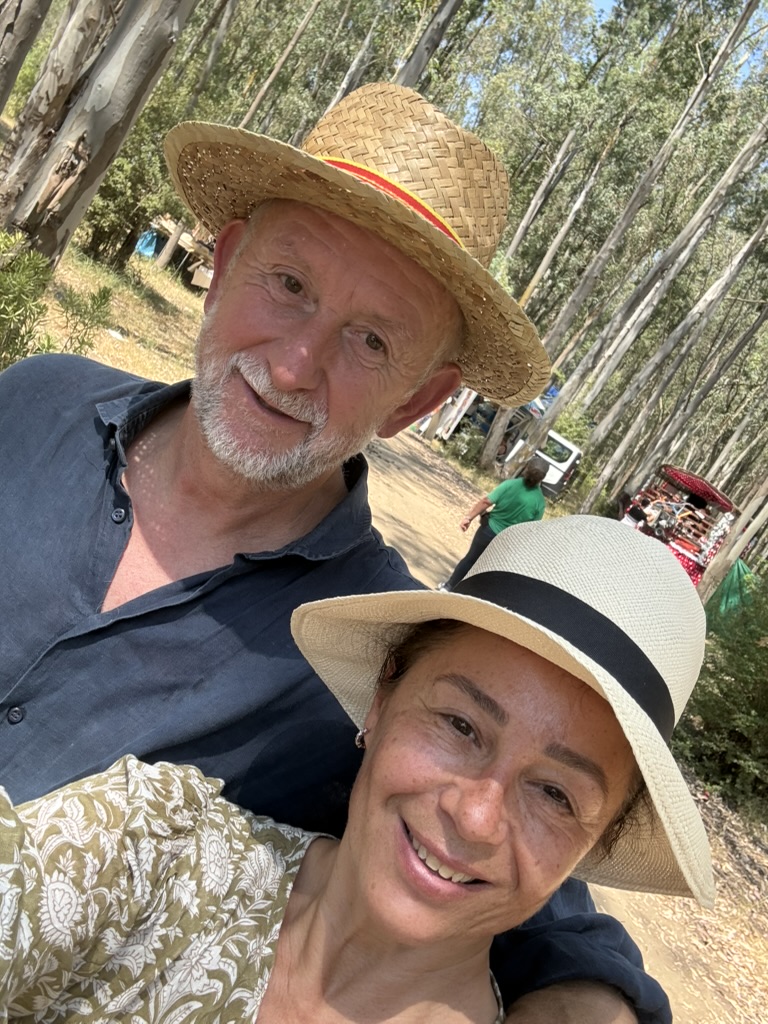
Our first Romería de la Virgencita de la Sierra — discovered by chance, and wonderfully colourful.
One morning, the owners of our rental house drove into the yard. Behind the car was a covered carriage — the kind that looked as if it had rolled straight out of a film about gypsy life.
“What is that?” we asked, curious.
It turned out that every year, on the last weekend of May, Algodonales celebrates the Romería de la Virgencita de la Sierra. In translation, you could call it a traditional pilgrimage in honour of the Virgin of the Mountains. The tradition dates back at least to the 19th century, and the procession makes its way out of town to Puente de la Nava — a large bridge in the forest, where the village party truly unfolds.
“Come and see it,” they told us.
And of course, we went.
It was not a town festival in the way we might usually imagine one. The celebration began with a procession in which everyone had a part to play: horses, decorated carriages, flowers, music, men in elegant riding clothes, and women in beautiful ruffled dresses that our eyes immediately associate with flamenco culture.

Horses, ruffles and festivity — the visual language of a romería is a world of its own.
There had been a church service the evening before, but religion did not seem to be the whole point of the celebration. It felt just as much like a way for the village to come together and say something without saying it out loud: this is who we are, this is our place, these are our people, and this is how we celebrate.
The Spanish take celebrations seriously. There is time to dress properly, to decorate the carriages and horses, and to pack food and drink for the day. But once the celebration begins, the plan itself seems to matter less. Things are allowed to unfold in their own way. What matters most is not keeping to a schedule, but moving calmly with the moment.
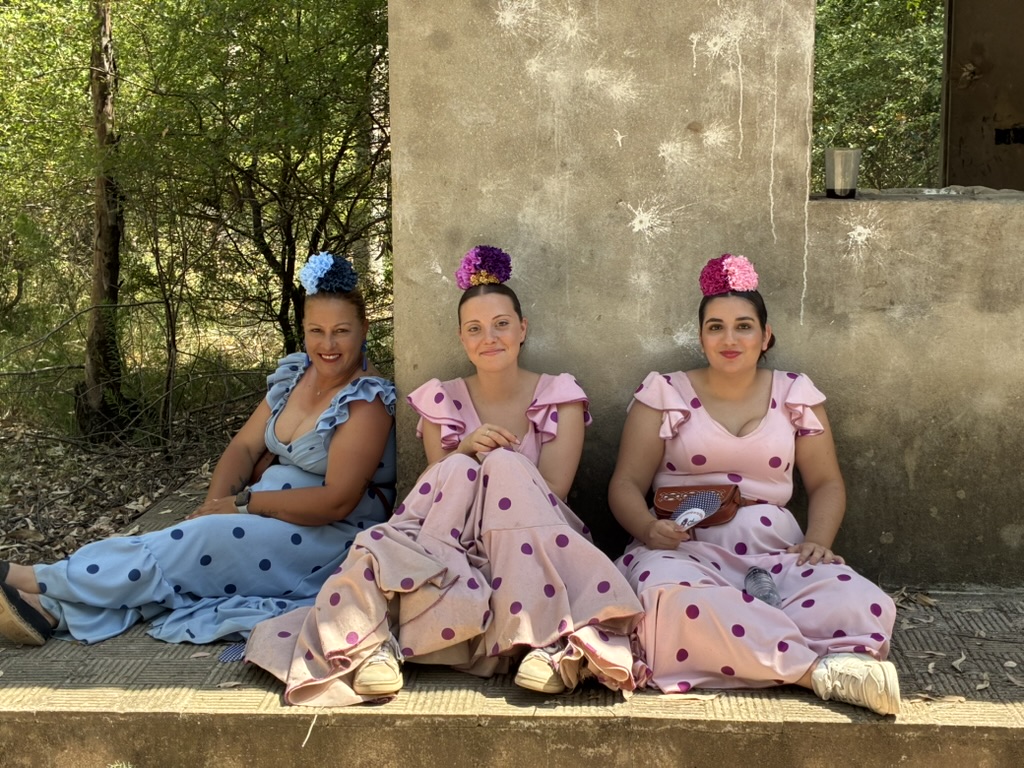
Spanish elegance and the ease of letting the moment unfold.
If something goes a little differently from the plan, it is not a disaster. Perhaps it was part of the plan all along.
And through all of this, there is no mania grandiosa. Nowhere do you sense an ambition to appear bigger, grander or more important than people really are. There is no excessive effort to make everything perfect, structured, efficient and productive.
It can almost look like a lack of ambition — but perhaps it is simply a different kind of ambition. The ambition to just be.
The swirl of colours and ruffles in the women’s dresses later made me curious about the roots of flamenco. I discovered that Andalusia is considered the cradle of flamenco, and that this culture is itself a little like one great romería: a meeting place of different peoples, journeys and destinies. It carries the influence of the gitanos, the Spanish Roma, as well as Moorish and Arabic echoes, traces of Sephardic Jewish song traditions, and Andalusia’s own earthy temperament.
Perhaps that is why flamenco feels so powerful: it carries pride, pain, joy, longing and dignity all at once.
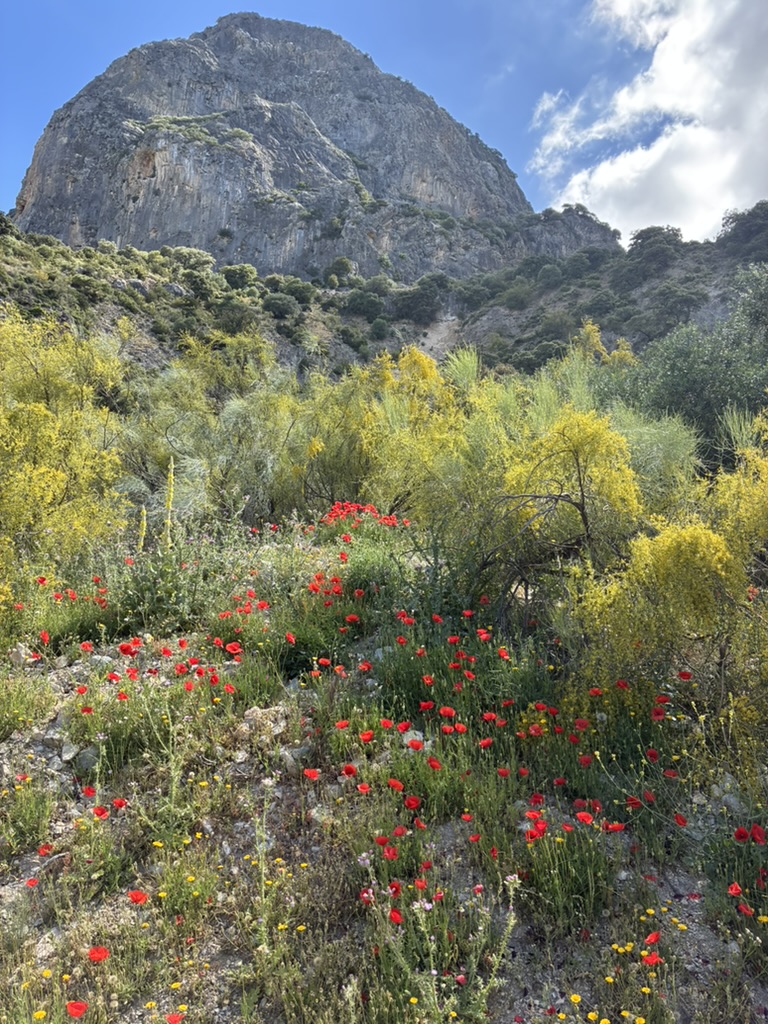
Mountains, olive trees and a slow life — the world of Los Cantos.
For us, the celebration was a small reminder of why we are creating Los Cantos. Working in the olive grove is an important part of it, but it is only one part of a way of life shaped by the Grazalema mountains, the endless olive groves on their slopes, a slower rhythm of life, more sunshine, less perfection and more presence.
And sometimes, all it takes is for someone to drive into the courtyard one morning with a strange little carriage and say:
“Come and see.”