
The Los Cantos olive grove does not grow on flat land — and that changes both the work and the oil.
When Simon and I bought the Los Cantos olive grove, we had no idea that an olive grove on a mountainside was quite a different thing from an olive field spread out on flat land.
Of course, we saw the mountains. They are rather hard to miss. On one side lies the Grazalema Natural Park, further away Lake Zahara, and all around us olive groves climb up the slopes, as if gravity barely touched them.
But we did not know that, together with that view, came one very practical fact: every job there is “slightly” harder.
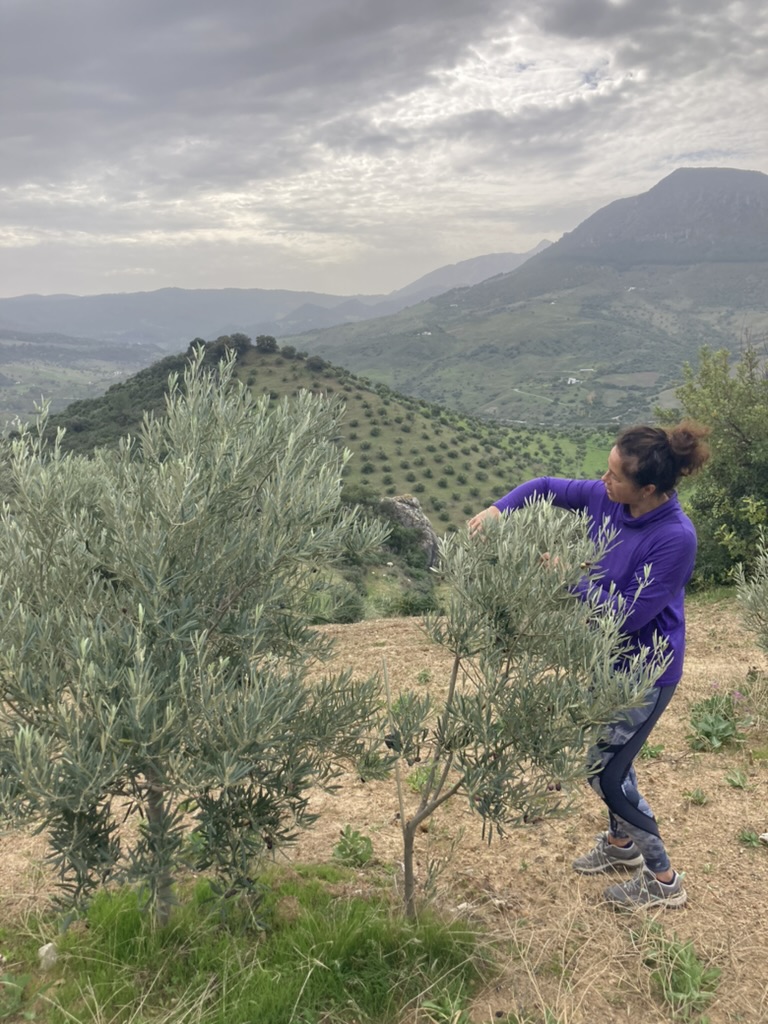
The view is wonderful, but the ground under your feet demands attention.
Harvesting olives, pruning branches, shredding them into mulch, removing new shoots — everything that might feel like ordinary work on flat land becomes a small balancing exercise on a mountainside.
During our first harvest, we learned very quickly why proper boots matter. The crates slipped, we slipped, and sometimes the only way to stop was simply to slide along while sitting on the ground. With a few decent bruises, of course.
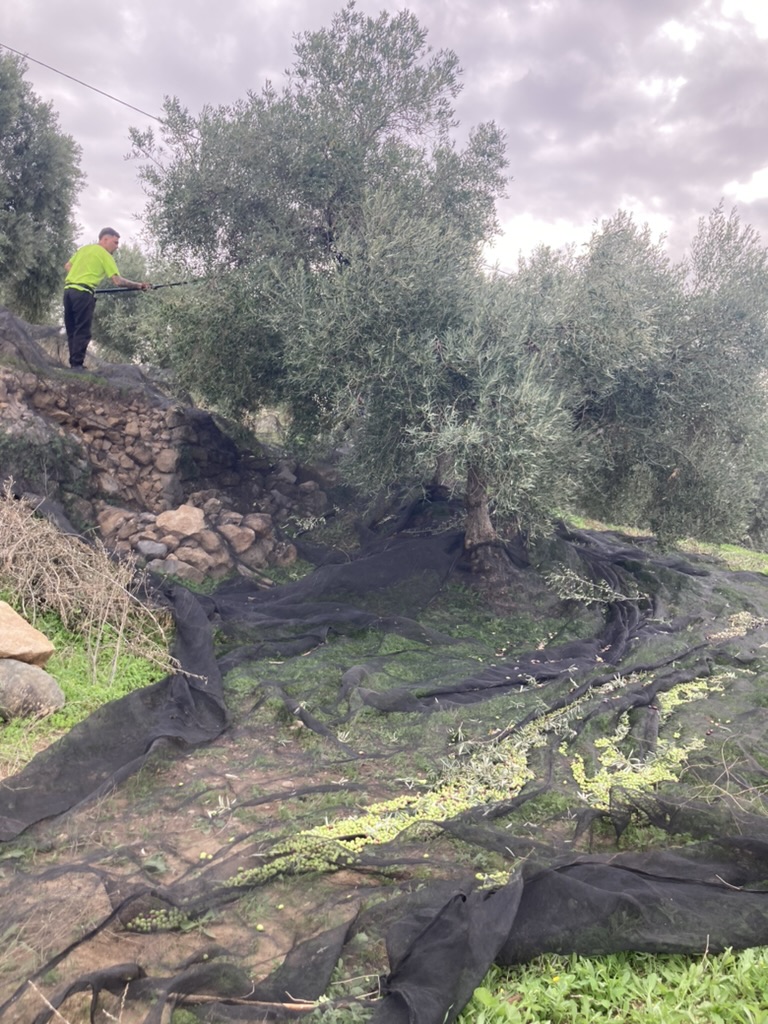
SHarvesting on a mountainside: nets, stones, olives and a constant balancing act.
But then you lift your eyes for a moment.
Right in front of you are the Grazalema mountains. Below, Lake Zahara glimmers. Morning light casts its shadows. The air is clear. And suddenly it is no longer just a harvest. It is a ritual.
Only later did we begin to understand that the mountain does not make an olive grove special only because of the view.
An olive tree growing in the mountains lives in different conditions. The soil is poorer, there is less water, the slopes are steeper, the nights can be cooler — in other words, the tree has to work harder. And with olive trees, this kind of moderate natural stress can give the oil more character.
A bit like people, really. Too much comfort rarely makes anyone very interesting. A little headwind, uneven ground and the need to make more of an effort tend to shape character. Not always pleasantly, but often quite effectively.
Simon and I attended a conference in Zahara called “Mountain Olive Grove and Health” — in Spanish, “Olivar de Montaña y Salud”. It was organised by our good friend Luis Lucero, the owner of the Almazara El Manzanillo olive mill — the same mill where our Los Cantos oil is pressed.
Three things stayed with us from the conference.
1. More polyphenols
Olives grown in the harsher conditions of the mountains can produce oil with higher levels of polyphenols. These are natural compounds found in olives that help the body cope better with everyday wear and tear.
In taste, you often recognise them as a slight bitterness and pepperiness. That little tickle in the throat is not a fault. It is one sign that the oil is alive.
Of course, bitterness and bitterness are not the same thing. Rancid or badly stored oil tastes tired and unpleasant. The bitterness and pepperiness of fresh, high-quality oil are different — green, clean and lively.
2. More good fat
Oil from mountain-grown olives may contain more oleic acid. This is a good fat, and one of the reasons extra virgin olive oil is considered one of the heart-friendly pillars of the Mediterranean diet. One simple idea kept coming through at the conference: it is not only how much fat we eat that matters, but what kind of fat we eat.
For me personally, after a year of using good olive oil more regularly, there was one pleasant surprise — my “bad” cholesterol had dropped noticeably. Of course, I would not attribute that only to olive oil, but it certainly made me look at the quality of fats in a different way.
3. A livelier aroma and taste
Oil from mountain olive groves often stands out for its aroma and flavour. Oil pressed from olives grown at higher altitudes can have more green notes — freshness, green leafy notes, and sometimes hints of artichoke or tomato leaf.
These flavours are not random. They are the trace of the landscape in the oil: altitude, drier soil, cooler nights and the slower growth of the tree.
For us, all this was a real discovery.
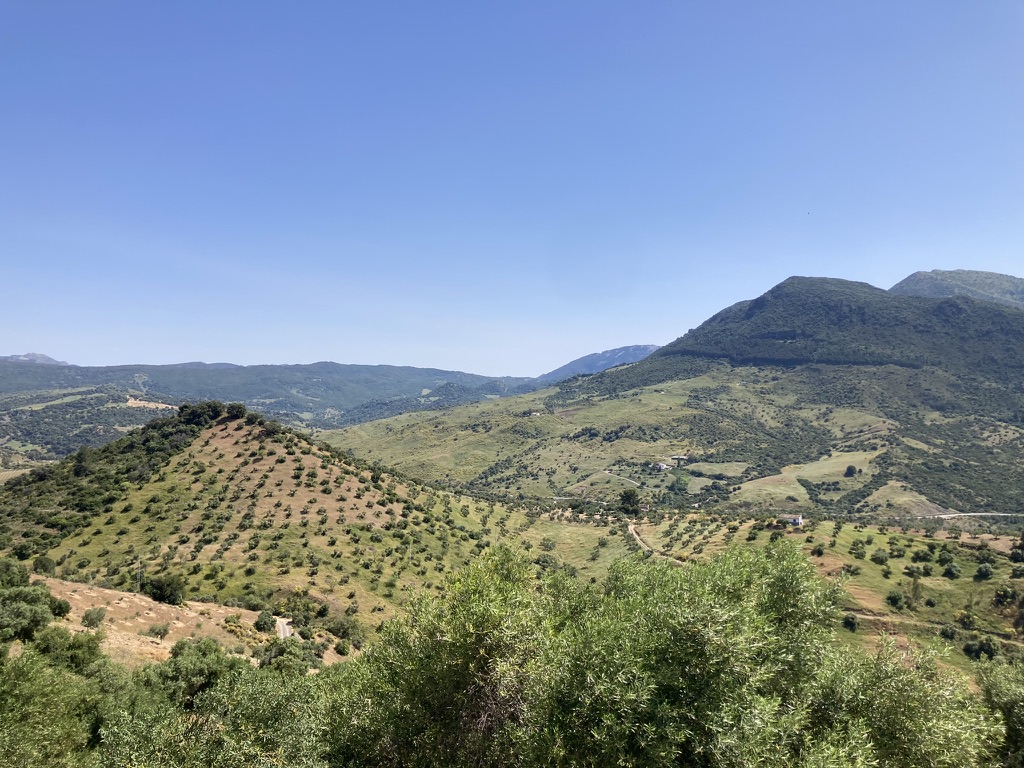
Mountains, olive trees and a landscape that leaves its mark on the oil.
Mountains do not make life easier. But they can make olive oil more interesting.
And the next time you feel like adding a delicate layer of flavour to a dish you have made, the answer may be simpler than you think: a good extra virgin olive oil.
For example, Los Cantos de la Era olive oil, from our own mountainside in Andalusia.