
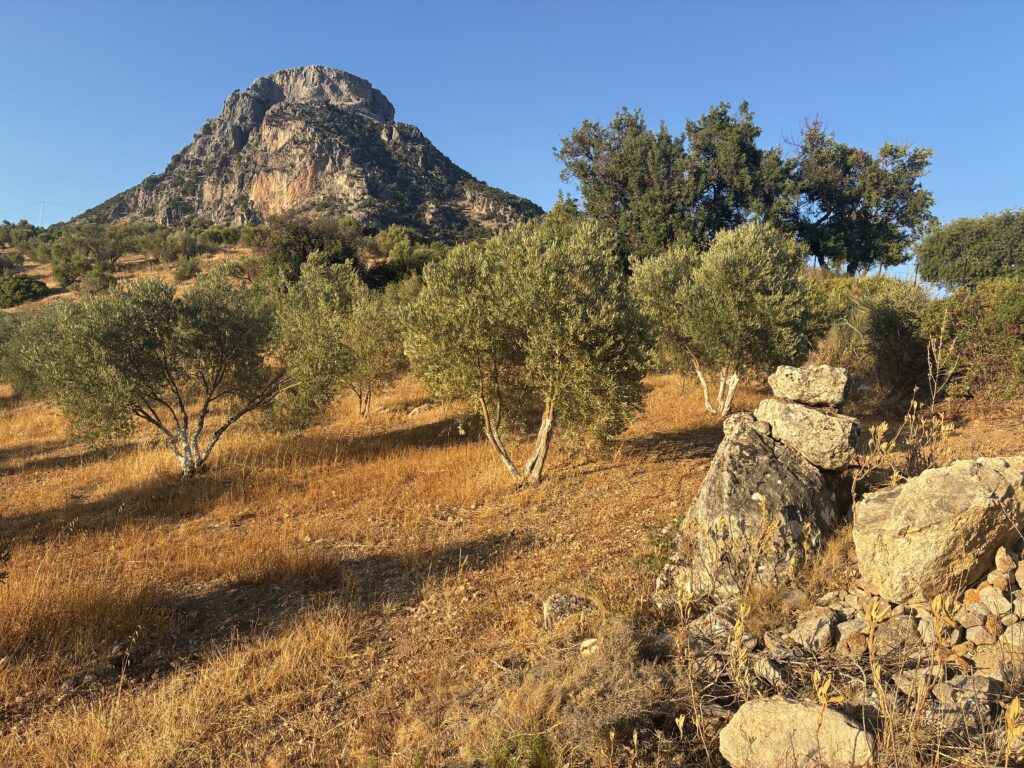
September at Los Cantos. The olive grove is getting ready for another harvest, in its own rhythm.
This autumn will be our third olive harvest at Los Cantos. And if these first three years have taught us anything, it is that olive trees know how to surprise you.
In our first year, we harvested around 700 kilos of olives and produced 150 litres of oil. By then, a powerful DANA storm that hit Spain at the end of October had knocked many of the olives off the trees. So we ended up picking more olives from the ground than from the branches. For us, still knowing very little about olive farming, it came as quite a shock.
A year later came another shock. This time in the opposite direction. We harvested 8,500 kilos of olives and produced 935 litres of oil. We hadn’t expected anything like such a big harvest. We were delighted, of course, and I suppose we also quietly began to feel that perhaps we were starting to understand this olive-growing business.
Then, in August, Esteban, one of our trusted helpers here, called us.
“There will be a very small harvest this year.”
We were in Estonia at the time, and it wasn’t exactly news we wanted to hear. How could that be? We had harvested early the previous year, pruned the trees properly, and the beginning of the year had brought record rainfall. As far as we were concerned, we had done everything right.
Simon, with decades of farming experience behind him, took it much more calmly.
“This is farming.”
You can do many things right, but you can’t order a good harvest. Nature always has a say.
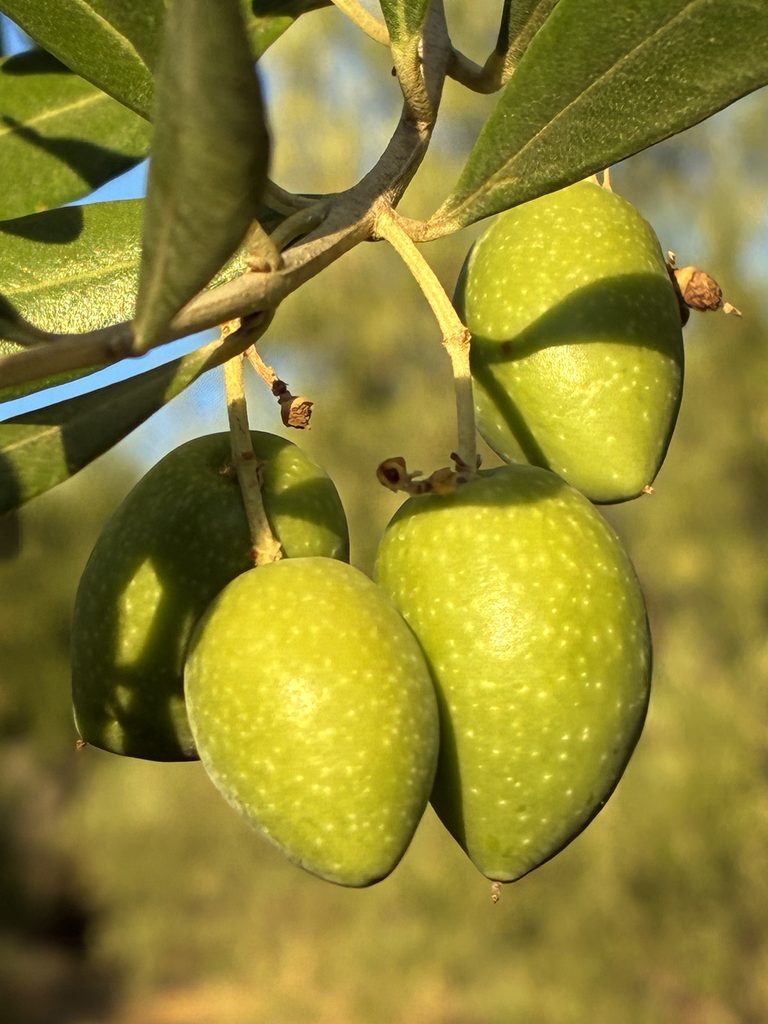
Fewer, but bigger – that’s this year’s crop.
When I returned to Los Cantos at the beginning of September, one of the first things I did was go and see the olive grove for myself. Seeing is believing, after all.
Esteban was right – there really are far fewer olives this year. Interestingly, it is mainly the old trees that are bearing fruit; the younger ones are almost empty.
But the olives that are there are big and beautiful. And the trees themselves look wonderful – green, dense and full of foliage. To me, they look even more lush than they did last year.
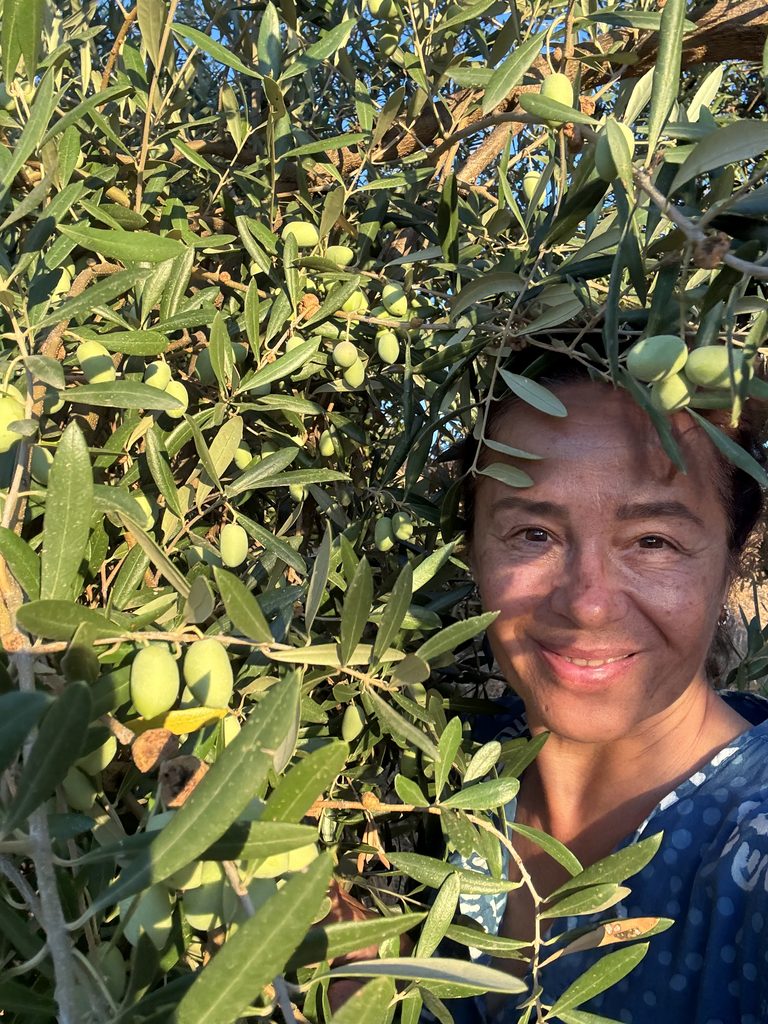
Back at Los Cantos – naturally, the first thing I wanted to do was see how our olive trees were doing.
Looking at them, I had the feeling they were saying: “We’re just taking a rest this year. Don’t worry.”
Later, I started wondering whether there was actually any science behind that feeling. It turns out there is.
Olive trees naturally tend to produce varying yields from year to year. A particularly abundant crop can affect shoot growth and flowering the following year, and therefore the next harvest. But it isn’t as simple as saying that a big harvest is always followed by a small one. Rainfall, temperature, water stress and other growing conditions all play their part. For us there is a familiar parallel in the way apple trees can behave.
Perhaps olive trees simply live to a slightly longer rhythm than we do, while every autumn we just want to know: how many kilos will we get this year?
At the moment, we have two answers to that question.
Joaquin, another of our trusted helpers here, thinks we’ll get no more than 1,000 kilos. Simon predicts 1,500–2,000 kilos.
We’ll see who’s right.
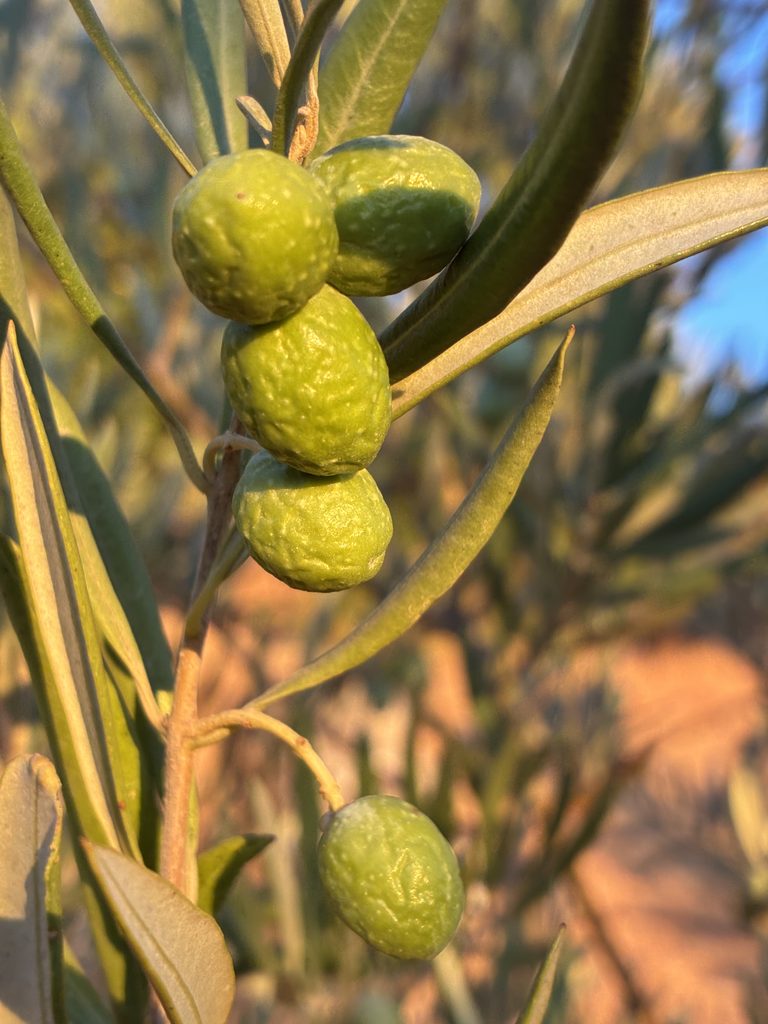
SThe olives are waiting for September rain too – the heat and dry weather have already left some of them a little shrivelled.
Now we’re hoping for a little rain in September. It would help the olives plump up before harvest and reduce the number that have become slightly shrivelled from the heat and dry conditions.
We’ll definitely start harvesting in the first half of October. Harvesting early is important to us because green, early-harvest olives give us an oil rich in polyphenols, even though they produce less oil per kilo of fruit.
After three years, I think we’ve learned at least one thing. A happy, healthy olive grove is a long-term project. Every year, we can take the best possible care of it and do everything we know how to do. But we don’t get to decide what kind of harvest nature will give us.
That isn’t always easy to accept. We like to believe that if we do everything right, we’ll get the result we want. But little by little, the olive grove is teaching us to be humble – to do our best while accepting that not everything is within our control.
Perhaps that is one of farming’s greatest lessons: we are not the masters of nature, but part of it.
And this year, we’re grateful for every kilo.
In October, we’ll let you know whose harvest prediction was closer – Joaquin’s or Simon’s. And in November, we’ll share the polyphenol results from our third harvest and explain why polyphenols are so good for our health.